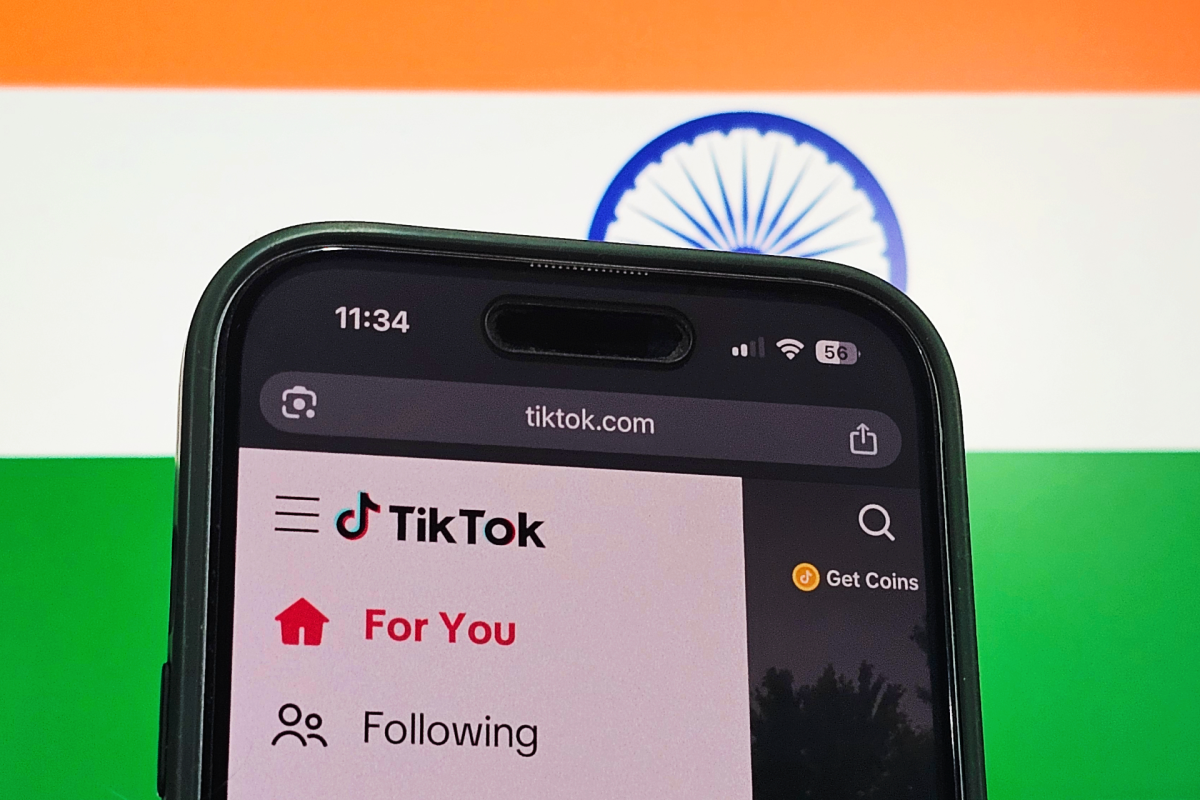

TikTok has officially denied plans to re-enter the Indian market, contradicting recent speculation sparked by reports that a localized version of its website had gone live in the country. The clarification, issued in a statement on August 22, 2025, comes nearly five years after India banned TikTok (along with over 200 other Chinese apps) in 2020 over national security and data privacy concerns. For Indian users and local content creators who have long hoped for the app’s return, the denial puts an end to short-lived excitement—while highlighting the ongoing uncertainty around TikTok’s future in one of the world’s largest social media markets.
The Rumor: A “TikTok India” Website Sparks Comeback Speculation
The buzz around TikTok’s potential return began earlier this week, when tech blogs and social media users noticed that a domain titled “tiktok-india.com” was active, displaying a landing page with Hindi and English text. The page, which has since been taken down, included a message inviting users to “stay tuned for updates” and a form to submit email addresses for notifications. Screenshots of the site quickly circulated on platforms like X (formerly Twitter) and WhatsApp, with many users interpreting it as a sign that TikTok was gearing up to relaunch in India.
Adding fuel to the rumors, local media outlets reported that TikTok’s parent company, ByteDance, had held “preliminary talks” with Indian government officials to address the 2020 ban’s concerns—including data localization (storing Indian users’ data within the country) and compliance with India’s digital laws. Some reports even claimed ByteDance was considering a “local partnership” with an Indian firm to navigate regulatory hurdles, a common strategy for foreign apps seeking to re-enter the market.
TikTok’s Denial: “No Plans to Relaunch in India”
In response to the speculation, TikTok released a clear, concise statement on August 22, quashing the comeback rumors entirely. “We are not planning to relaunch TikTok in India, and the recently reported website is not affiliated with our company,” the statement read. “TikTok respects the Indian government’s regulations, and we have no updates to share regarding a return to the market at this time.”
A TikTok spokesperson further clarified to TechCrunch that the “tiktok-india.com” domain was not registered or operated by ByteDance, suggesting it may have been created by a third party. “Domain squatting and unofficial fan pages are common in markets where TikTok has a strong legacy, but this does not reflect our business plans,” the spokesperson added.
To address lingering confusion, TikTok also urged users to verify information through official channels, noting that any future market entry would be announced via its corporate website and verified social media accounts— not through an unrecognized domain.
Why India’s Ban Persists: National Security and Regulatory Tensions
TikTok’s denial underscores the enduring challenges of re-entering India, where tensions between the government and Chinese tech firms remain high. The 2020 ban, imposed by India’s Ministry of Electronics and Information Technology (MeitY), cited “risks to sovereignty and data security” amid a broader geopolitical rift between India and China. Since then, MeitY has tightened regulations for foreign apps, requiring stricter data localization, transparency in algorithm use, and compliance with India’s Digital Personal Data Protection Act (DPDPA), which took effect in 2024.
While some banned Chinese apps (like Shein and Temu) have re-entered India through local partnerships or altered business models, TikTok’s case has proven more complex. The app’s short-form video format, which relies heavily on user-generated content and data-driven algorithms, has raised concerns about misinformation, cultural influence, and data misuse—issues that Indian regulators have yet to fully resolve with ByteDance.
Legal experts note that even if TikTok wanted to return, the process would be lengthy. “Re-entering India would require TikTok to meet strict compliance standards, including storing 100% of Indian user data locally and submitting to regular audits,” said Priya Singh, a tech policy lawyer at Delhi-based firm Luthra & Luthra. “Given the government’s current stance on Chinese apps, it’s unlikely these hurdles would be cleared quickly—if at all.”
Impact on Users and the Indian Social Media Market
For Indian users, TikTok’s denial is a disappointment. Prior to the 2020 ban, TikTok had over 200 million monthly active users in India, making it one of the country’s most popular apps—especially among young people and small-scale content creators. Many creators relied on the platform to build audiences and monetize content, and its absence created a void filled by homegrown alternatives like Josh, Moj, and ShareChat.
While these local apps have gained traction, none have matched TikTok’s global reach or algorithmic sophistication. “TikTok’s For You Page was unmatched for discovering niche content,” said Riya Sharma, a 22-year-old content creator from Mumbai who now posts on Josh. “Local apps work, but they don’t have the same reach—especially for creators who want to go viral beyond India.”
For the broader Indian social media market, TikTok’s continued absence has allowed global rivals like Instagram Reels and YouTube Shorts to dominate. Instagram Reels, in particular, has grown rapidly in India, amassing over 300 million users by 2025, according to Meta’s internal data. Without TikTok’s return, these platforms are likely to retain their dominance—unless a new competitor emerges to challenge them.
What’s Next for TikTok and India?
Despite the denial, industry watchers say TikTok has not completely abandoned India. ByteDance has continued to invest in Indian tech startups (including edtech and e-commerce firms) and has explored non-social media ventures in the country, such as cloud services and enterprise software. These moves suggest ByteDance is maintaining a presence in India while waiting for regulatory conditions to improve.
“TikTok’s parent company is playing the long game in India,” said Arjun Mehta, a tech industry analyst at Counterpoint Research. “They’re not rushing to relaunch the app, but they’re staying engaged with the market through other channels. If India’s regulatory stance softens in the future, TikTok could pivot quickly to re-enter.”
For now, though, Indian users will have to wait. TikTok’s latest statement makes it clear that a comeback is not in the cards—at least not anytime soon. As the spokesperson put it: “We understand the enthusiasm for TikTok in India, but our focus remains on complying with local regulations and supporting our global markets. There’s no change to our position on India.”